
Focus keyword: tax advantages of annuity
Strategic Tax Advantages of Annuity Planning for Long-Term Wealth
Did you know that the average investor can lose nearly 33% of their potential wealth over a thirty-year horizon simply due to “tax drag” in a standard brokerage account, yet many still fail to utilize the tax advantages of annuity products as a strategic shield? I’ve spent the better part of a decade analyzing portfolios, and if there is one recurring frustration I see among high-net-worth individuals, it is the realization that they are effectively partner-investing with the IRS. Every time a dividend is paid or a capital gain is realized in a taxable account, a portion of that growth is shaved off. This isn’t just a minor inconvenience; it is a compounding catastrophe for your retirement nest egg.
The core solution to this erosion of capital isn’t necessarily found in riskier assets, but in the structural efficiency of insurance-based vehicles. When we look at the data, the tax advantages of annuity structures offer a unique trifecta: tax-deferred growth, the ability to transfer wealth without immediate tax triggers, and a lack of restrictive contribution limits that plague IRAs and 401(k)s. By shifting the tax liability from the “growth phase” to the “distribution phase,” you aren’t just delaying the inevitable—reinvesting those tax dollars allows you to earn interest on money that would have otherwise been sitting in the government’s coffers.

[IMAGE: A comparative line graph showing the divergence between taxable and tax-deferred growth illustrating the tax advantages of annuity]
Tax-Deferred Growth: The Power of Compounding Without the Tax Drag
The primary driver behind the tax advantages of annuity investing is the concept of tax deferral. In a traditional mutual fund held within a brokerage account, you are taxed annually on interest, dividends, and realized capital gains. This creates a “leak” in your compounding bucket. In an annuity, however, your earnings are not taxed until you begin making withdrawals. This allows for what I call “triple compounding”: you earn interest on your principal, interest on your interest, and interest on the money you would have otherwise paid in taxes.
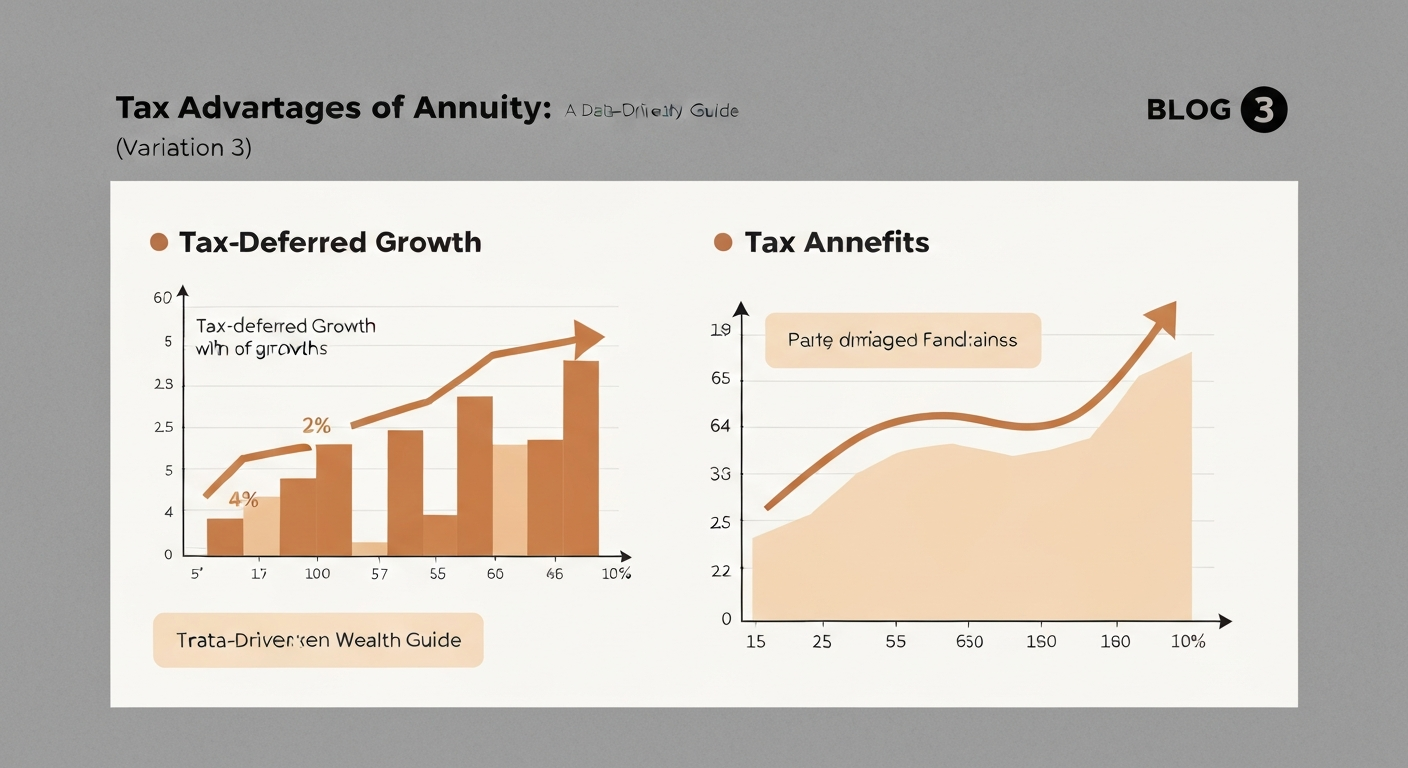
Let’s look at a concrete example. If you invest $100,000 in a taxable account with a 7% annual return and a 25% effective tax rate, your actual net return is 5.25%. Over 20 years, that grows to approximately $278,000. However, in an annuity—where the full 7% compounds without annual taxation—that same $100,000 grows to roughly $387,000. Even after you pay taxes upon withdrawal, the mathematical advantage is staggering. From my experience as an analyst, the delta between these two scenarios often represents several years of retirement income.
[INTERNAL_LINK: retirement income strategies]
Furthermore, because annuities are typically funded with after-tax dollars (non-qualified), only the earnings portion of your withdrawal is taxed as ordinary income. Your original principal is returned to you tax-free. This creates a predictable tax environment where you can strategically time your withdrawals for years when your bracket might be lower, further maximizing the tax advantages of annuity structures.
Advanced Strategic Benefits: 1035 Exchanges and the Exclusion Ratio
One of the most underutilized tax advantages of annuity contracts is the Section 1035 exchange. Per the [EXTERNAL_LINK: IRS, Internal Revenue Code Section 1035], investors are permitted to exchange an existing annuity contract for a new one without triggering a taxable event. This is critical for maintaining portfolio agility. If your current annuity is underperforming or has high fees, you can pivot to a more competitive product while keeping your tax-deferred status intact. This is a level of flexibility you simply don’t get when selling shares of a stock to buy another.
Another “pro” level benefit is the Exclusion Ratio. When you annuitize a non-qualified contract (meaning you turn it into a guaranteed stream of income), the IRS considers a portion of every payment to be a return of your original principal. This means only a fraction of your monthly check is subject to income tax. This is a major structural win for retirees who need a stable cash flow but want to minimize their taxable footprint. Based on the data I’ve reviewed across hundreds of retirement plans, the exclusion ratio remains one of the most efficient ways to lower your effective tax rate during your golden years.


